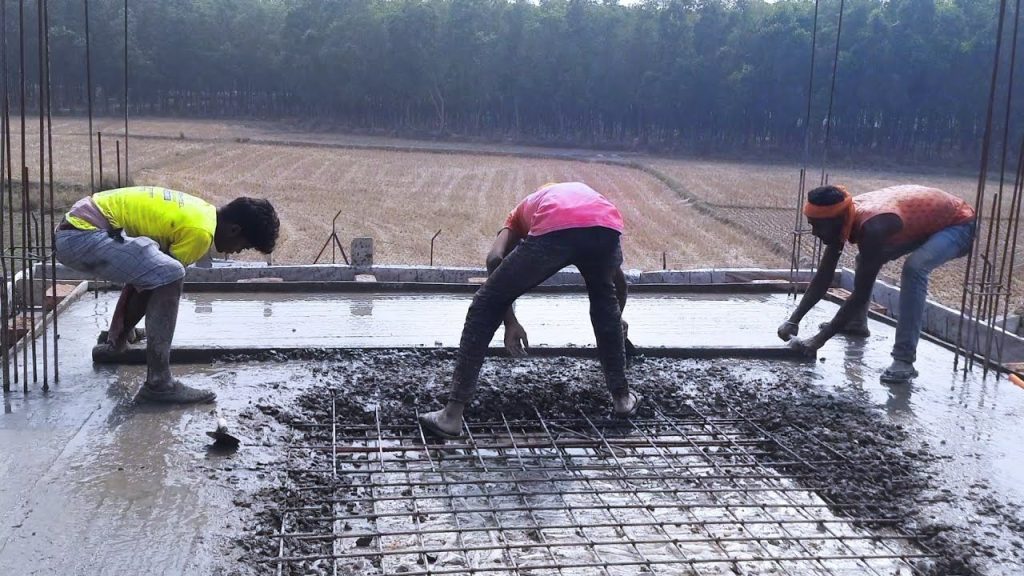
Roof slab work, or dhalai as it is commonly known, is one of the most critical stages in home construction. A weak roof slab can lead to cracks, seepage, corrosion, and expensive repairs later. That is why choosing the best cement in Assam for roof casting is not just about price — it is about long-term durability and structural safety.
In Assam and across Northeast India, construction faces additional challenges due to heavy rainfall, humidity, and seismic activity. The cement used for slab work must therefore offer strong bonding, low cracking, good workability, and reliable durability.
This guide explains what homeowners should actually look for before selecting cement for dhalai and roof slab construction.
Quick Answer: Which Cement Is Best for Roof Slab Work in Assam?
For roof slab and RCC dhalai work in Assam, PPC cement is often preferred because it offers better durability, reduced heat generation, improved workability, and lower chances of cracking. Cement designed for moisture resistance and corrosion protection performs particularly well in Northeast Indian conditions.
Products like Topcem Cement and Topcem SDC are commonly used for residential slab work due to their focus on durability and weather resistance.
Why Roof Slab Cement Selection Matters in Assam
Assam experiences:
- Heavy annual rainfall
- High humidity
- Temperature fluctuations
- Earthquake-prone conditions
All these factors directly affect roof slabs and RCC structures.
If poor-quality cement is used during dhalai, homeowners may face:
- Roof leakage
- Surface cracks
- Weak concrete strength
- Rusting of steel reinforcement
- Damp walls and ceiling seepage
Since roof slabs remain continuously exposed to weather conditions, selecting the right cement becomes extremely important for long-term performance.
What Makes a Good Cement for Dhalai?
Not every cement performs equally well during roof slab casting. Good cement for dhalai should provide:
High Compressive Strength
The slab must be able to withstand structural load over many years.
Better Workability
Good workability helps masons and contractors achieve proper concrete finishing and compaction.
Low Heat of Hydration
Excess heat during curing can increase the chances of cracks in large roof slabs.
Crack Resistance
A good cement should minimize shrinkage cracks and improve long-term slab stability.
Corrosion Protection
In Assam’s humid climate, protection against steel corrosion becomes important for RCC durability.
Moisture Resistance
Low permeability helps reduce seepage and dampness issues.
OPC vs PPC Cement for Roof Slab Work
This is one of the most common questions during house construction.
OPC Cement
OPC (Ordinary Portland Cement) develops strength quickly and is often used when:
- Faster construction is needed
- Early strength is important
- Heavy-load RCC work is involved
However, OPC can generate more heat during hydration.
PPC Cement
PPC (Portland Pozzolana Cement) is widely preferred for residential roof slab work because it offers:
- Better durability
- Lower heat generation
- Improved crack resistance
- Better long-term strength
- Higher resistance to moisture and seepage
For homes in Assam and the broader cement in Northeast market, PPC cement is often considered more suitable for roof casting and residential RCC work.
Common Roof Problems in Assam Homes
Roof Seepage
Heavy rainfall can expose weaknesses in poor-quality slab construction.
Cracks After Dhalai
Improper curing or unsuitable cement may lead to visible cracks.
Steel Corrosion
Humidity gradually affects reinforcement bars if concrete quality is weak.
Damp Ceiling
Low-density concrete may absorb moisture over time.
Choosing durable cement along with proper curing practices can significantly reduce these problems.
Best Cement in Assam for Roof Casting
When evaluating the best cement in Assam for dhalai work, homeowners should focus on:
- BIS-certified quality
- Consistent strength
- Workability
- Weather resistance
- Long-term durability
- Regional suitability
Many contractors in Northeast India prefer cement brands that are developed keeping local weather conditions in mind.
This is where regionally experienced manufacturers often have an advantage over generic market options.
Why Topcem Cement Is Commonly Used for Dhalai in Northeast India
Topcem Cement has established a strong presence across Assam and Northeast India through products designed for local construction requirements.
Its cement products are manufactured using advanced dry process technology and undergo quality testing to meet BIS standards.
Topcem SDC for Roof Slab Work
Topcem Solid Dhalai Cement (SDC) was developed specifically considering Northeast India’s:
- Heavy rainfall
- Humidity
- Corrosion challenges
- Structural durability needs
Some notable characteristics include:
- Better workability
- Low heat hydration
- Crack resistance
- Anti-corrosive properties
- Durability under wet conditions
The product is designed to help improve slab performance and long-term structural life.
Topcem SDC FTR++
Topcem SDC FTR++ is positioned as a foundation-to-roof cement solution suitable for multiple construction stages.
Features such as:
- Uniform performance
- Crack-resistant formulation
- Moisture-resistant packaging
- Better finishing
make it relevant for modern residential roof slab construction in Assam.
Tips for Strong Roof Slab Construction
Even the best cement performs properly only when construction practices are correct.
Maintain Proper Water-Cement Ratio
Too much water weakens concrete strength.
Ensure Proper Mixing
Uneven mixing affects slab durability.
Do Proper Vibrator Compaction
This reduces air gaps and improves concrete density.
Cure the Slab Properly
Continuous curing for at least 7–14 days helps concrete gain strength.
Use Fresh Cement
Avoid old or moisture-exposed cement bags.
Mistakes to Avoid During Dhalai
Choosing Cement Only Based on Price
Cheap cement may increase future maintenance costs.
Poor Curing Practices
Insufficient curing is one of the biggest reasons for slab cracks.
Using Excess Water
Extra water weakens concrete and increases shrinkage.
Ignoring Local Climate
Assam’s rainfall and humidity demand durable cement with better moisture resistance.
Not Consulting Engineers
Professional guidance is important for structural RCC work.
Final Recommendation
Choosing the right cement for roof slab work is one of the most important decisions during house construction. In Assam’s challenging climate, homeowners should prioritize durability, crack resistance, moisture protection, and long-term structural performance over short-term cost savings.
For residential dhalai and roof slab work, PPC cement is often considered a practical choice because of its durability and lower cracking tendency. Regionally trusted brands like Topcem Cement have gained popularity across Northeast India by developing products suited for local construction conditions.
When combined with proper curing and good construction practices, quality cement can significantly improve the lifespan and safety of a home.
FAQs
1. Which is the best cement in Assam for roof slab work?
The best cement in Assam for roof slab work is one that offers durability, crack resistance, low permeability, and strong long-term performance in humid conditions. Trusted regional brands like Topcem Cement are widely used for residential RCC and roof slab construction across Northeast India.
2. Is PPC cement better for dhalai?
Yes, PPC cement is commonly preferred for residential dhalai because it provides better durability, lower heat generation, and improved crack resistance. Topcem Cement offers PPC-based solutions designed for long-lasting performance in Assam’s weather conditions.
3. Why is roof slab cement important in Assam?
Heavy rainfall and humidity in Assam increase the risk of seepage and corrosion, making cement quality extremely important. Topcem Cement products are developed considering Northeast India’s climate and durability requirements.
4. What is the advantage of Topcem SDC for roof slabs?
Topcem SDC is designed for better durability, anti-corrosive protection, and crack resistance under Northeast Indian conditions. Its improved workability and moisture resistance make it suitable for residential roof slab and RCC work.
5. Which cement reduces roof cracks?
Cement with low heat hydration and good workability helps reduce shrinkage and roof slab cracking. Products like Topcem SDC are designed to improve crack resistance during slab casting.
6. Is OPC or PPC better for slab casting?
For residential roof slabs, PPC cement is generally preferred due to better long-term durability and weather resistance. Many builders in Assam choose PPC-based Topcem Cement products for improved slab performance.
7. How long should roof slab curing be done?
Proper curing should ideally continue for at least 7–14 days depending on site conditions. Along with good curing practices, using high-quality cement like Topcem Cement helps improve concrete strength and durability.
8. Can poor cement cause roof leakage?
Yes, low-quality cement or improper concrete work can lead to seepage and dampness over time. Durable cement products with low permeability, such as Topcem Cement, help reduce moisture-related issues.
9. Why is corrosion resistance important in RCC slabs?
Corrosion weakens steel reinforcement and reduces the lifespan of the structure. Topcem SDC is designed with anti-corrosive properties to improve RCC durability in humid regions like Assam.
10. Is Topcem Cement suitable for Assam weather?
Topcem Cement products are designed considering Northeast India’s heavy rainfall, humidity, and construction requirements, making them a commonly preferred choice for residential and commercial construction in Assam.